





Agriculture Summit Africa Targets $300m Pipeline to Build Africa’s Next Food Superpower
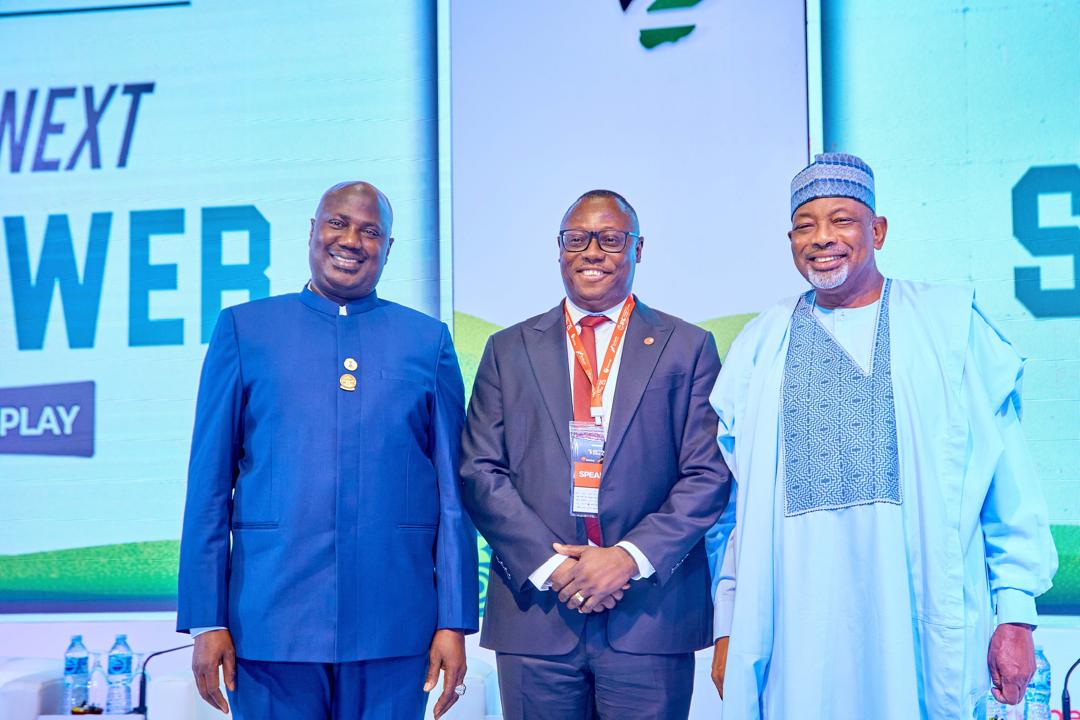
Abuja, Nigeria – The Agriculture Summit Africa (ASA) has set a $300 million investment pipeline target for Africa’s agriculture sector, as the conveners moved to connect viable agribusiness opportunities with investors and development finance institutions. The Summit, which hosted over 12,000 participants sought to translate discussions into deployable capital and ultimately, a doubling of Africa’s agriculture GDP output.
Held under the theme, ‘Building the Next Superpower: Africa’s Food Power Play,’ the two-day Summit focused on a longstanding contradiction at the heart of African agriculture: a continent with vast agricultural resources and production potential that continues to import significant volumes of food, struggle with limited access to finance and capture too little of the value created between farm and consumer. In Nigeria, for example, agriculture contributes close to a quarter of economic output but receives less than five percent of banking industry lending.
For Abubakar Suleiman, Managing Director and Chief Executive Officer of Sterling Bank, closing that gap requires more than another conversation about agriculture. It requires capital, risk-sharing, infrastructure and deliberate ownership of the systems around production.
“The true measure of a summit is not the quality of its speeches, rather, it is the quantity of its consequences. Our work is to convert conversations into projects, projects into finance, finance into productive capacity, and productive capacity into affordable food,” Suleiman said.
That position is backed by Sterling’s own growing exposure to the sector. Agriculture, which accounted for less than one percent of the Bank’s loan book when it began its deliberate push into the sector 14 years ago, now represents 18 percent, with the agricultural loan portfolio reaching ₦277 billion as of April 2026, up 30 per cent year-on-year.
Over the same period, Sterling has deployed more than $500 million to support Nigeria’s agriculture output. The Bank highlighted that enterprises supported by that capital have created more than one million jobs and added over one million metric tonnes to national agricultural output, while more than 150,000 smallholder farmers and businesses have entered the formal financial system. Women account for 40 percent of those beneficiaries and young people 65 percent.
Yet, Suleiman argued that increasing the volume of capital available to farmers would solve only part of the problem. The deeper challenge, he said, is building the financing, risk, processing, infrastructure and market systems required for Nigeria to retain more of the value created by its agriculture. Pointing to cassava as an example, he shared that Nigeria produces more cassava than any other country in the world, yet accounts for only about two per cent of the global processed cassava market.
“We grow most of it, and we keep almost none of what it is worth. The gap, therefore, is not a farming problem, but one about ownership,” Suleiman said.
ASA 2026’s co-convener, Sunbeth Global Concepts, echoed the call to move from producing raw commodities to owning their value. Delivering the Summit’s special remarks, the Company’s Managing Director, Olasunkanmi Owoyemi, said Africa gives away too much of its wealth by exporting crops cheaply and buying them back as finished goods.
“For too long, Africa has been content to be the world’s farm, whilst others have become the world’s kitchen. The power play this summit calls for is the decision to change that. To stop exporting our value, and start building on it, to move from food security to food sovereignty. At Sunbeth, we’ve made that our goal. In less than a decade, we’ve grown from a company sourcing cocoa in the farming communities of Ondo into one of Nigeria’s largest leading indigenous exporters. Exporting raw beans, however successfully, is not the summit of our ambition, and so we’re investing in value addition, here, in Nigeria, and across West Africa,” stated Owoyemi, who was represented by Jason Green, Head of Sustainable Sourcing, Africa at Sunbeth’s London-based trading arm, SFI Agri Commodities.
Owoyemi announced that Sunbeth is building two purpose-built plants at its new Sunbeth Industrial Park – a 70,000-tonne cocoa processing facility and an 80,000-tonne cashew processing facility – both scheduled to begin operations in 2027, so that more of the value in each crop stays on Nigerian soil.
Also speaking at the Summit, the Honourable Minister of Agriculture and Food Security, Senator Abubakar Kyari, said Africa must convert its vast agricultural endowments into economic value if it is to emerge as a global food power. He noted that the continent holds about two-thirds of the world’s remaining uncultivated arable land but continues to spend more than $100 billion annually on food imports.
“Endowment is not power. Conversion is power. Those are the raw inputs of a superpower: land, people, market. And none of that is in dispute. What is not settled is conversion,” Kyari said.
Kyari said the Federal Government was working to address the gap through initiatives such as the Special Agro-Industrial Processing Zones programme, whose first phase mobilised $520 million in co-financing with development partners across seven states and the Federal Capital Territory. He called for greater private-sector investment in processing, storage, logistics and distribution, adding: “Our task in government is to make those investments bankable, not to take your place.”
The Minister of State for Agriculture and Food Security, Senator Aliyu Abdullahi, similarly described the Federal Government’s objective as food sovereignty, which he said should not be interpreted as the elimination of all imports, but as achieving sufficient national control over the food chain and the country’s major sources of nutrition.
“Let us be massively in control of our food chain and caloric sources. That way, we will be producing what we eat and eating what we produce,” Abdullahi said.
ASA 2026 also drew participation from across government, development finance, agribusiness and the wider food ecosystem. Amongst the contributors were Idi Mukhtar Maiha, Honourable Minister of Livestock Development; Dr. Benjamin Ashaver, Benue State Commissioner for Agriculture and Food Security; Samson Bugama, Plateau State Commissioner for Livestock Development, Veterinary Services and Fisheries; John Akoji, Country Director, SNV Nigeria, and Rilwan Sumonu, Managing Director, Noor Takaful. Other notable voices included Sarah Ockman, IFC’s Upstream Advisory Manager for Agribusiness in Africa; Ujwal Senapati, Managing Director of Saro Agro-Allied; Von Kemedi, Managing Director of ARILA Group; Mercy Ogodo, Technical Advisor on Gender and Civil Society Engagement at GIZ; Massimo De Luca of the European Union Delegation to Nigeria and ECOWAS; Achie Stay, Agriculture and Food Markets Adviser, British High Commission; Marie‑José Tafforeau, Agribusiness Development Adviser, Federal Ministry of Industry, Trade and Investment (FMITI); Dr. Ndidi Okonkwo Nwuneli, founder of African Food Changemakers and LEAP Africa; Ayodeji Sontinrin, Managing Director of the Bank of Agriculture; Ayodele Olojede, Chief Operating Officer of the Development Bank of Nigeria; Mohammed Aliyu, IFC Senior Country Officer for Nigeria, and more.
For Sterling, the push for execution will continue beyond the two days of the Summit. Suleiman said the Bank will help structure opportunities emerging from ASA 2026, support financing for shortlisted projects and track the conversion of commitments made at the Summit into deployed capital.
The Bank has already mobilised more than $100 million in blended finance from development partners and is developing infrastructure intended to address some of the constraints that have historically kept smallholder farmers outside the formal financial system.
Among these is FarmPass, developed with Rabobank and Mastercard, which aims to bring 250,000 smallholder farmers into the formal financial system over the next seven years. More than 10,000 farmers have already been onboarded during its pilot phase.
Sterling has also launched AgricHub, an agricultural business platform designed to connect farmers and agribusinesses with financiers, markets and agricultural technology companies, creating an ecosystem through which capital, enterprise and market opportunities can more readily meet.
ASA 2026 was supported by a broad coalition of public, private and development-sector partners, including the International Finance Corporation (IFC), GIZ, UK International Development, Mastercard, IDH, the National Agricultural Development Fund, Development Bank of Nigeria, Federal Ministry of Livestock, YAPU Solutions, Sterling One Foundation, Saroafrica, ARILA Group, ThriveAgric, AFEX, Propcom+ (UK Aid), BATN Foundation, LSETF, Leadway Assurance, and other organisations across finance, agribusiness, technology, insurance and development.
//Ends.
About Agriculture Summit Africa
Agriculture Summit Africa (ASA) is the continent’s premier platform for advancing agricultural innovation, investment, and structural transformation. The annual summit unites policymakers, global investors, development finance institutions, agribusiness leaders, and technology innovators to move African agriculture from subsistence to commercial scale. By facilitating policy alignment, strategic deal-making, and cross-border trade partnerships, ASA drives actionable capital and sustainable solutions to build a resilient, self-sufficient, and globally competitive African food economy. For more information, visit https://agricsummit.org/.
About Sterling Bank
Sterling Bank Limited is a full-service national commercial bank in Nigeria and a member of Sterling Financial Holdings Group. With a heritage of more than 60 years, the bank has evolved from Nigeria’s pre-eminent investment banking institution to a trusted provider of retail, commercial, and corporate banking services.
Sterling is a forward-thinking financial institution committed to transforming lives through innovative solutions, exceptional service, unwavering integrity, and a steadfast focus on its HEART strategy, which centers on Health, Education, Agriculture, Renewable Energy, and Transportation. As pioneers in digital banking and financial inclusion, Sterling continues to lead by example, showing how purpose-driven leadership can deliver transformative outcomes for individuals, businesses, and society at large.
Guided by a culture of innovation and a passion for excellence, Sterling Bank remains dedicated to redefining the banking experience for millions of customers across Nigeria.
